The Importance of Physical Media: The End of Accidental Preservation
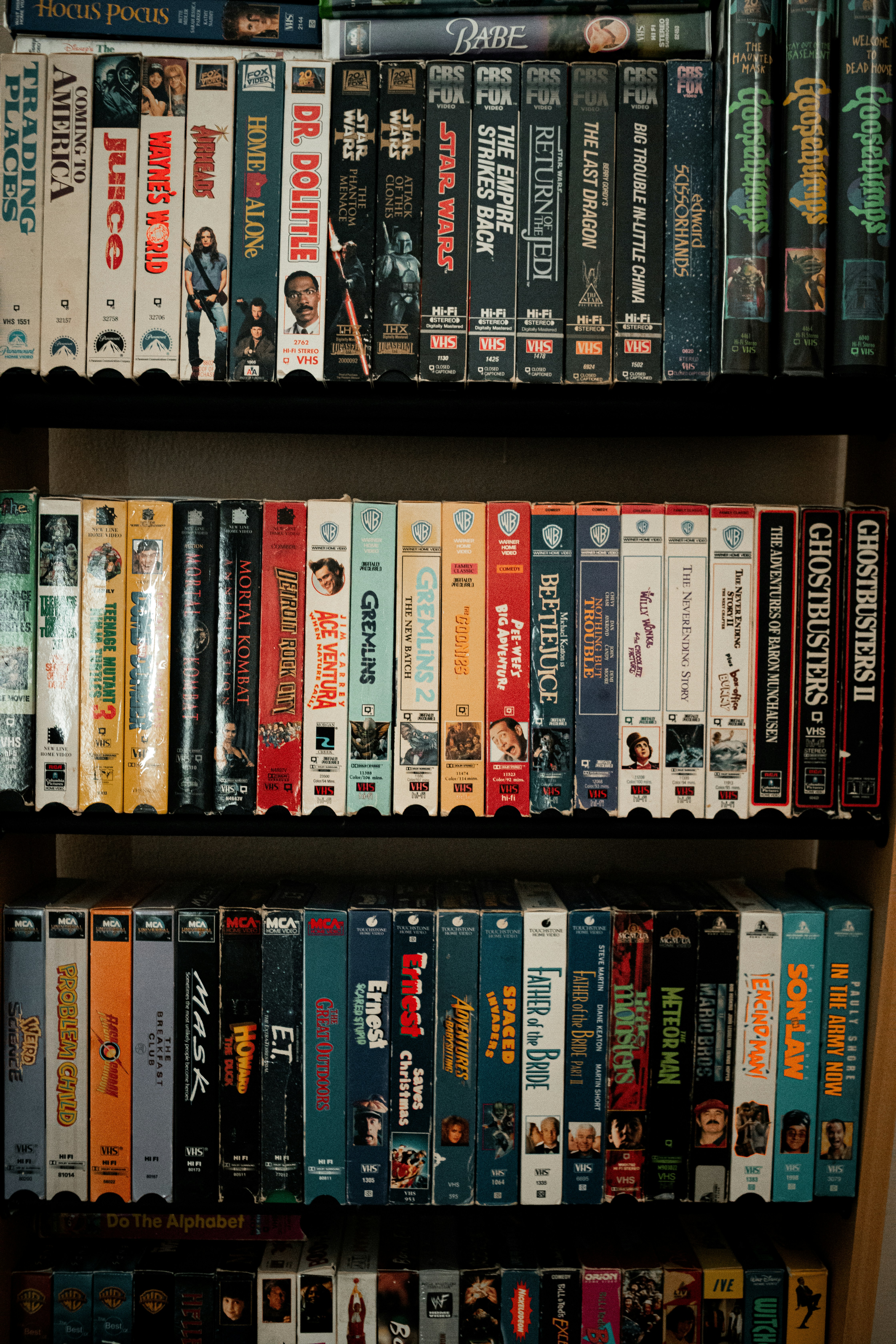
In this series: Importance of Physical Media
Preservation used to be a byproduct of profit. Studios kept films in their vaults because home video turned back catalogues into perpetual revenue streams. Every VHS tape or DVD sold meant someone, somewhere, had a copy—whether the studio cared or not.
Streaming broke that link. Now, platforms keep films available only as long as they drive subscriptions. The moment a title stops justifying its server costs or residual payments, it disappears. And unlike physical media, when streaming platforms remove a film, there's no copy on anyone's shelf. It's just gone.
The problem isn't technical. Digital files don't decay the way film stock does. The problem is economic: without the profit motive that home video provided, most films have no financially rational reason to remain accessible. And without physical copies circulating, there's no backup when the platform decides a film isn't worth keeping.
The Tax Write-Off Era
In August 2022, Warner Bros. Discovery began removing content from HBO Max at an unprecedented scale. The company deleted dozens of original series and films—not to license them elsewhere, but to claim them as tax write-offs. Batgirl, a completed $90 million film, was shelved before anyone could see it. Westworld, a critically acclaimed series, vanished from the service entirely.
By the end of 2022, Warner Bros. Discovery had removed several hundred classic Looney Tunes shorts from HBO Max, including iconic episodes like "What's Opera, Doc?" and "Duck Amuck." By March 2025, all original Looney Tunes shorts from 1930 to 1969 were completely removed from Max. Cartoon Network's entire back catalogue disappeared from HBO Max. In December 2023, Sony announced it would remove over 1,300 seasons of Discovery content from PlayStation users' libraries—not just from the store, but erased from accounts where users had already paid for permanent access. Massive public backlash forced Sony to postpone the deletion, granting a temporary 30-month extension. But the threat was real, and the "solution" was merely a delay—proving that digital "ownership" offers no genuine protection when platforms decide content isn't worth keeping.
This wasn't mismanagement. It was strategy. Content removal lets platforms eliminate residual payments to creators, accelerate amortisation schedules, and claim impairment charges as tax deductions. Warner Bros. Discovery wrote off approximately $3.5 billion in content, much of which is now inaccessible through legal means.
Under the home video model, this would have been impossible. Once DVDs existed in circulation, studios couldn't make a film disappear even if they wanted to. The distributed nature of physical ownership meant preservation happened automatically, regardless of corporate strategy.
When Delayed Discovery Becomes Impossible
The most dangerous consequence of streaming's economic model is what happens when interest in a film arrives late. Under home video, delayed discovery was monetisable. A film could build an audience slowly over years or decades, and each new fan represented a potential sale. Time-generated value.
Streaming inverts this. Discovery that doesn't happen rapidly and at scale has no value to platforms. If a film gains an audience years after release but the licensing window has closed, renewed interest can't restore access. The film remains unavailable.
In early 2025, Warner Bros. Discovery began uploading over 30 films from its library to YouTube—free, ad-supported, often in poor quality. The selection was bizarre: critically acclaimed films like The Science of Sleep and The Mission alongside notorious flops like The Adventures of Pluto Nash. Most weren't available on Max, Warner Bros.' own streaming platform. The message was clear: these films have no perceived value. Rather than maintaining them on their premium service or selling them through proper distribution, the studio dumped them on YouTube, where ad revenue might cover server costs but offers no path to proper preservation.
This represents a fundamental shift. When a platform decides content isn't worth hosting, it becomes undiscoverable, not just unprofitable. Without physical copies in circulation—no shelves, no catalogues, no used DVD bins—delayed interest is futile. Discovery without availability equals loss.
The Orphan Works Problem
Physical media's distributed preservation was especially critical for films that studios had abandoned. The British Library estimates that 40% of all copyrighted works are orphaned, meaning their rights holders can't be identified or located. For film, the proportion is likely higher.
These "orphan works" create a legal trap. Archivists and preservationists can't restore or digitise films without permission. When the rights holder is unknown, permission is impossible to obtain. The result: legal paralysis while films deteriorate.
According to Duke University's Center for the Study of the Public Domain, orphan films include newsreels, actuality footage, silent films, experimental works, home movies, independent documentaries, political commercials, and educational films—a significant portion of the twentieth-century cultural record.
Physical media bypassed this problem through decentralised preservation. Widespread VHS and DVD ownership meant films remained accessible even after studios withdrew support. Consumer ownership operated as a distributed backup, a redundancy that streaming platforms can't replicate.
Copyright terms lasting 70+ years after an author's death or 95 years for corporate works mean most twentieth-century films remain locked under copyright long after anyone profits from them. Without physical copies circulating, these films simply vanish from legal accessibility.
The Mid-Tier Disappearance
Streaming platforms have strong incentives to preserve certain films. Blockbusters like Avatar will always be maintained—they drive subscriptions. Canonical masterpieces get preserved by archives and boutique labels like Criterion.
Everything in between is at risk.
Mid-budget dramas from the 1990s. Weird independent films. Genre experiments. Documentaries that found small audiences. These films don't drive enough engagement to justify streaming platform costs, but they're not culturally significant enough for archival rescue.
Under home video, these films survived because someone owned them. Small distributors could produce limited DVD runs—2,000 copies, 5,000 copies—and make them economically viable. Physical inventory created a floor: as long as discs existed, the film existed.
Streaming has no equivalent. Either a film is on a platform, or it isn't. Either it justifies its costs, or it gets removed. There's no middle tier, no marginal existence, no slow circulation through used media stores.
The cruel irony: these mid-tier films are exactly the ones that benefit most from time. Unconventional works, films ahead of their era, productions that initially confused audiences—physical media gave them decades to find their people. Streaming's rapid turnover doesn't allow for delayed appreciation.
Consumer as Archivist
Physical media turned consumers into inadvertent archivists. Each DVD purchase contributed to a distributed preservation network. This wasn't intentional—people bought films to watch them, not to preserve cinema history. But the collective result functioned as cultural insurance.
When studios stopped supporting a film, it didn't disappear. Copies remained in private collections, libraries, used bookstores, and online marketplaces. Films could be rediscovered, exchanged, gifted, and studied independently of corporate interests. This decentralisation was fundamental to preservation.
Streaming recentralised film access. Films on streaming platforms are managed based on licensing agreements and business decisions. Once content is removed, users can't access or preserve it. The platform controls whether a film exists in an accessible form.
This recentralisation puts the least commercially valuable films at greatest risk. Studios preserve what's profitable. Archives preserve what's culturally canonical. But the vast middle—films that are neither blockbusters nor masterpieces but still represent cultural memory—have no structural protection.
What Remains
Boutique labels like Criterion, Arrow Video, Kino Lorber, and Vinegar Syndrome continue releasing carefully curated editions, often funding restorations through collector sales. These releases prove the old logic still works on smaller scale: delayed discovery can generate revenue when people can buy films outright.
But these labels serve a niche market. They can't preserve all of cinema, just as used bookstores can't safeguard all literature. Their reach is limited. Physical media is no longer standard distribution—it's an exception, a luxury, a collector's pursuit.
The question is what happens to everything outside that exception. For most films, once the streaming window closes, there's no plan. No boutique label will rescue them. No archive will prioritise them. They'll simply cease to exist in any accessible form.
The home video era's accidental preservation system is gone. The replacement isn't a different preservation system—it's no system at all. Just a collection of corporate decisions about what's worth keeping available this quarter, with no mechanism to catch what falls through.
Accidental preservation is over. What comes next depends on whether enough people are willing to preserve films intentionally—through what they buy, what they support, and what they refuse to let disappear. The streaming era offers convenience and access. It doesn't offer permanence. That requires us to care on purpose.
Christopher Bray
Engineering open algorithms to map the invisible connections of cinema. I build discovery tools that look beyond streaming catalogs to ensure film history isn't lost to the algorithm.