How a Legal Blunder Birthed a Genre
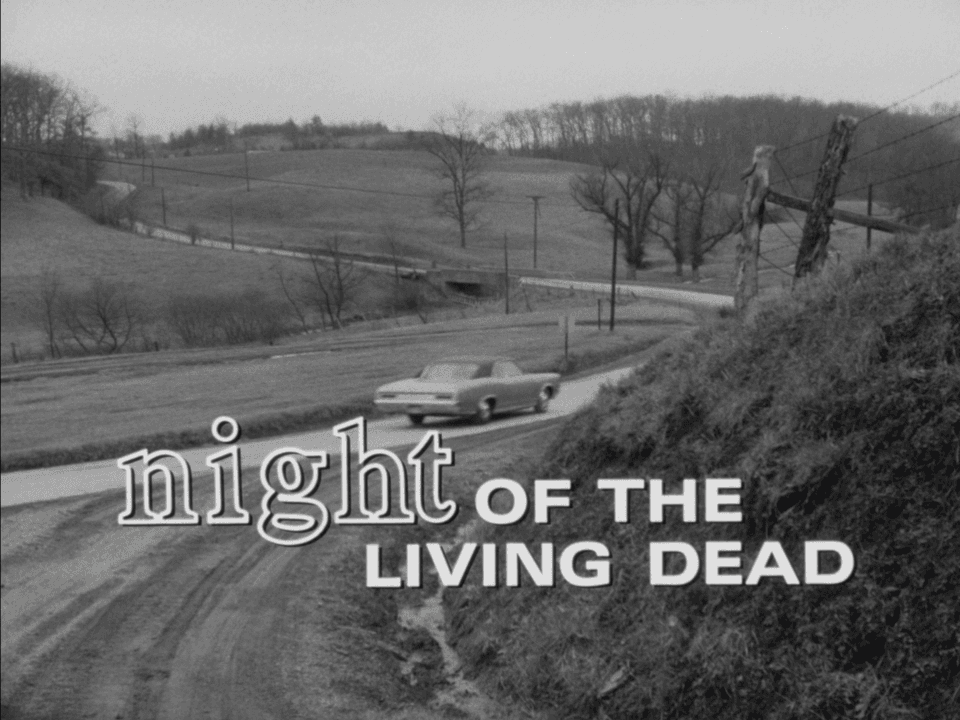
In the world of film preservation, a missing copyright notice is more than a clerical error. It's a death sentence for commercial value and, often, for the film itself. But the most famous copyright accident in cinema history didn't kill its film. Instead, it turned Night of the Living Dead into a cultural juggernaut.
George A. Romero's 1968 masterpiece is the ultimate paradox of cinema: a film that was physically neglected because it lacked a legal steward, yet became a global phenomenon precisely because it belonged to everyone. When a work falls into the public domain through accident rather than age, it creates a unique crisis: commercial incentive vanishes, leaving no one to pay for preservation, even as the film spreads everywhere in degraded, bootleg copies.
The Fatal Omission
The story of how Night of the Living Dead became an orphan is a cautionary tale of clerical error. At the time of its release, U.S. copyright was governed by the Copyright Act of 1909. Under this law, a work had to display a specific copyright notice (the © symbol, the year, and the owner) upon publication to secure protection.
Originally titled Night of the Flesh Eaters, the film's distributor, the Walter Reade Organisation, changed the name just before its release. In the rush to swap the title cards, the copyright notice was accidentally deleted. In an instant, the film fell into the public domain. Without copyright protection, there was no legal "parent" to collect royalties, enforce rights, or invest in preserving the original elements.
The Open-Source Monster
Whilst many see this as a financial tragedy, it served as a unique catalyst for the film industry. Because the film was free to use, it became the "open-source" blueprint for modern horror.
Without the barrier of licensing fees, Romero's specific vision of the modern zombie became public property: the slow-moving reanimated corpse, the infectious bite, the headshot as the only cure. Whilst zombies existed in earlier films and folklore, it was Romero's particular archetype that defined the genre for decades to come. This allowed future filmmakers to iterate on his ideas without fear of litigation. As George C. Romero (the director's son) noted in his reflections on the film's legacy, the "zombie" would likely not be the multi-billion dollar industry it is today if it had been locked behind a corporate copyright.
The film's public domain status democratised horror, allowing it to be broadcast on every local TV station and sold in every bargain bin, building a massive, grassroots cult following that a controlled release could never have achieved. Compare this to other horror films of the era like Rosemary's Baby (1968) or The Exorcist (1973), which remained valuable properties but never inspired the same proliferation of direct imitators and spiritual successors.
The Cost of Being "Free"
However, this cultural democratisation came with a steep physical cost. The "positive" effect of free access was counterbalanced by a complete lack of stewardship.
For decades, the market was flooded with hundreds of "bootleg" copies. These were often grainy, 10th-generation transfers that looked and sounded terrible. More importantly, since no single entity had a commercial incentive to protect the master elements, the original 35mm negatives were left to rot. Romero himself once lamented that nobody saves this material because the storage costs are too high.
This is the paradox of accidental public domain: when a work belongs to "everyone," it often belongs to "no one."
Rescuing the Public Domain
The survival of Night of the Living Dead ultimately required intervention from those who cared about film history, not profit. In 2016, the Museum of Modern Art (MoMA) and The Film Foundation stepped in to perform a massive 4K restoration. This wasn't driven by commercial incentive (the film was still free to copy) but by the recognition that this accidental public domain work was a vital piece of cultural history.
The film's restoration raises broader questions about preservation in the digital age. Whilst modern copyright law has closed the loophole that created NOTLD's situation (works are now automatically copyrighted upon creation), thousands of other films from the early-to-mid 20th century exist in similar legal grey zones. They're trapped by expired copyrights, unknown rights holders, or corporate abandonment.
The lesson of Night of the Living Dead is clear: preservation requires intentional stewardship. Whether through copyright holders protecting their investments, public institutions stepping in when commercial incentives fail, or new legal frameworks that balance access with preservation, we must actively ensure our cultural history doesn't fade into vinegar and dust.
But that film really gave us our careers. I have no complaints.
How You Can Support Film Preservation
Preservation is a collective effort that starts with awareness and ends with action, whether films are under copyright, in the public domain, or trapped in legal limbo.
1. Support British and Global Archives
- BFI National Archive: One of the largest film archives in the world. You can support their work through memberships or by attending screenings of restored works.
- The Film Foundation: Founded by Martin Scorsese, this organisation funds restoration of classic films worldwide.
- The National Film Preservation Foundation (NFPF): A US-based charity that provides grants to save films that have no commercial life left.
2. Become a "Citizen Archivist"
You can help preserve film history by identifying, cataloguing, and sharing information about forgotten works.
- The National Archives (UK): Explore their guides on how to research and identify old film stock.
- AMIA (Association of Moving Image Archivists): A global community for those dedicated to the preservation of moving images.
3. Watch and Share Legally
Support boutique labels that invest in licensing and restoring obscure works. Buying releases from The Criterion Collection, BFI, Arrow Films, or Eureka (Masters of Cinema) is a direct vote for more preservation.

Christopher Bray
Engineering open algorithms to map the invisible connections of cinema. I build discovery tools that look beyond streaming catalogs to ensure film history isn't lost to the algorithm.